An interactive diagnostic test can show you how focused your company’s activities are — with sometimes surprising results.
by Art Kleiner
ach of these four sources of value reinforces the others. Alignment makes it easier to integrate people across the company, which leads to greater effectiveness as colleagues learn from colleagues. An ethic of careful investment leads people to find ways to use their capabilities in more parts of the organization. Before too long, your company can grow at a faster pace, and at lower cost, than it ever could before.
One final note: Although the Coherence Profiler is focused on the performance of individual companies, the results will also help test a hypothesis about the evolution of industries. The authors believe it will help show the ways in which specific segments reward their most coherent competitors. When you answer the questions and provide us your contact information, you will gain access to this research, which may ultimately reveal the underlying forces that separate short-lived from long-lived companies in your industry.
Author Profile: * Art Kleiner is the editor-in-chief of strategy+business and the author of The Age of Hereti
During the past year, as part of the research and development of the capabilities-driven strategy concept, a few companies have been looking more closely at their own coherence. The results are beginning to show a link between performance and strategy — but not in the way that many companies currently think of their strategy. The difference is coherence. You can see what that means, and compare your company to others in your industry, by taking a brief online survey: the Booz & Company Coherence Profiler.
The word coherence, to many businesspeople, suggests simply having your act together — doing business with better-than-average uniformity and coordination. But in the forthcoming book The Essential Advantage: How to Win with a Capabilities-Driven Strategy, by Paul Leinwand and Cesare Mainardi (Harvard Business Press, 2010), the word means something much more specific. For a company to be described as coherent, it must be resolutely focused on the interrelationship among three critical elements: its market position (its chosen “way to play” against competitors); its most distinctive capabilities, which work together as a system; and its product and service portfolio. In a coherent company, the right lineup of products and services naturally results from conscious choices about the capabilities needed for a deliberate way to play.
The questions in the Coherence Profiler, designed by Leinwand, Mainardi, and a Booz & Company team, take about five minutes to answer. They are designed to accomplish two things. First, the test provides a real-time diagnostic for those filling it out, identifying the relative level of coherence in any company or business unit. This gives managers an immediate sense of their business’s effectiveness in applying their capabilities to growth strategies, cost cutting, and the setting of management priorities. It also provides a rapid benchmark against competitors: Businesses can see immediately how coherent or incoherent their business is compared with others in their sector.
Second, by collecting information across companies, the test is building a body of knowledge about strategic choice. When managers profile their companies, in other words, they become part of a broad-based research effort that is testing the link between coherence and performance. Although the data is gathered anonymously, participants can opt to submit their e-mail address separately — and they will then receive updates on capabilities-driven strategy and related research.
Leinwand and Mainardi have proposed that coherence yields a consistent premium in performance derived from four sources of value:
* Effectiveness. Day in and day out, you become more effective where it matters most. You “sweat” your capabilities, refining and developing your methods and processes. Because your capabilities reinforce one another in a system, they improve more rapidly than the capabilities of your less-coherent competitors. Your people become more skilled; your systems grow more adept; your profitability improves. As you advance, other companies find it more and more difficult to catch up.
* Efficiency. As you apply your capabilities more broadly across more products and services, your investment in each of them goes further and you can build them up with more power. Small parts of your business, those that could never afford, say, a highly distinctive merchandising system on their own, can take advantage of this capability along with the rest of your company.
* Focused investment. By allocating capital and expense more deliberately and effectively, you focus more on the capabilities that differentiate your company competitively and less on what Gary Hamel and C.K. Prahalad called table stakes — the necessary competencies and skills that every competitor brings to this market. You don’t fund unnecessary R&D projects or marketing campaigns. You invest in depth where depth is needed, and go light where you should go light.
* Alignment. When you commit to a strategy and articulate it clearly, everyone has a common basis for the day-to-day decisions they make. Throughout your company, people in different businesses and different geographic areas are more likely to understand one another, and to make decisions independently that are nevertheless in sync. More-coherent decision making becomes part of your company’s culture. The advantage this gives you over less-coherent competitors is palpable.
Wednesday, November 24, 2010


next to share? the ASX ..

The Mitsubishi ASX is here. This is the third and final part of the new model onslaught (after the Pajero and Lancer Sportback) by Mitsubishi Motors Malaysia, which surely must be the busiest car company in the second half of 2010. The ASX, which was introduced in Japan as the RVR earlier this year, is billed as a compact crossover that aims to combine the good points of an SUV and a sedan.
At under 4.3 metres long, the ASX is noticeably smaller in footprint than the CR-V and X-Trail, but its 2,670 mm wheelbase actually betters the Honda and Nissan. The platform sitting under this 2WD crossover is adapted from bigger brother Outlander. Going with the compact and agile theme, turning radius is a class leading 5.3 metres. The suspension consists of MacPherson struts up front and multi links at the back, while the steering is an electric system.
The ASX is powered by the 4B11 2.0-litre engine as found in the Lancer. This DOHC 16-valve MIVEC unit produces 150 PS and 197 Nm of torque, which is slightly less than the C-segment sedan’s 155 PS/199 Nm, but it’s tuned to suit this application. Doing transmission duty is an INVECS-III CVT with 6-speed Sports Mode, controllable via nice and long magnesium shift paddles.
The kit list includes Active Stability Control (ASC), Hill Start Assist, dual front airbags plus a driver’s knee airbag, leather seats, cruise control, auto air con and a 2-DIN touch screen ICE system. The latter incorporates a reverse camera. Fully imported CBU from Japan, the ASX retails at RM139,980 OTR inclusive of insurance.
We’ve driven the ASX already – once in Japan and once in beautiful Langkawi – so look after the jump for our impressions and verdict!
Just a raised Lancer? That was what I expected before driving the ASX, but after two rounds of testing Mitsubishi’s compact crossover at the company’s Tokachi proving ground in Hokkaido and then closer to home in Langkawi, the ASX proved to be much more than that. Certain aspects that we don’t like about the Lancer have disappeared altogether!
Let’s start from the inside. It won’t take long to notice the more premium feel and better quality over the Lancer. Instead of making the entire dash panel out of soft plastic, Mitsubishi added a piece of slush material on the surface of the dash where your hands can reach. The front door caps are also of the same material, although the rear ones don’t get this treatment. The area where you rest your elbows are also padded and leather covered.
Leather is also found covering the seats, steering wheel and gear knob. It’s all in black, and the centre stack is in glossy black as well. There’s some silver and chrome accents to break the monotony. As usual for Mitsubishi, the area central to the driver is nicely done – the instruments are sporty and classy at the same time, the high-res full colour LCD trip computer display is cool and the three-spoke wheel feels as good as it looks. Making a repeat appearance are those long magnesium shift paddles that have a substantial action.
The centrepiece of the dash is the Kenwood touch screen entertainment system. This 2-DIN unit also doubles up as a display for the reverse camera. All the above combine for a pleasant interior that’s streets ahead of the Lancer in quality and fit – no unsightly gaps here! A good driving position is easy to find, the steering is adjustable for reach and the driver’s seat has a big height range.
We’re no big fans of the 4B11/CVT combo in the Lancer, which tiring drone is very uninspiring. And while the ASX uses the same engine and gearbox, the workings seem to much better insulated from the cabin. It feels sprightly from the get go, and there’s less of the elastic CVT response when you floor the pedal. Besides feeling more natural in D, the gearbox’s manual mode comes in handy in fast driving where you need immediate response. Performance and acceleration is entirely adequate, and there weren’t any situation where it was found to be lacking.
I was pleasantly surprised by the performance and looked up the specs. More surprise was in store. The ASX’s low kerb weight of 1,375 kg is actually 10 kg less than the Lancer GT’s, while the comparatively lethargic feeling Honda CR-V weighs 1,540 kg. That explains it all.
The ASX’s compact footprint suggests an agile crossover, and it delivers in the drive. The well weighted steering is precise and has reasonable feel, while the other controls feel natural. Wearing 16-inch wheels with high profile 65 series rubber, the ASX rides very well over bad roads, soaking up most of what Langkawi tarmac threw at it with ease. There’s some body roll in corners, but it’s not of the off-putting variety and doesn’t distract from the business of driving.
It’s no sports car of course, but the ASX isn’t too uncomfortable under hard driving, and you won’t feel awkward pushing it too. The addition of ASC in addition to ABS and EBD is commendable, as is the driver’s knee airbag.
Boot space isn’t spectacular but decent considering there’s a full sized spare inside the car, and the load height is quite low. It would be great if the Lancer Sportback’s handy seat folding levers were included here as well. Although the ASX’s wheelbase is 50 mm longer than the CR-V’s, it’s not reflected in rear legroom, which is more apparent in the Honda, proving that bare figures don’t tell the full story. Headroom isn’t generous, but adequate, and the ASX feels more compact inside than in a CR-V or Nissan X-Trail. Feels roomier than the Peugeot 3008, though.
There’s nothing groundbreaking about the Mitsubishi ASX, but it’s a likable car that’s decent to drive. Personally, I like its compact size, but reckon that there will be as many whose idea of an SUV/crossover is of a bulkier vehicle with more presence. If that’s you, the ASX won’t be in contention, but if you’re sold, the ASX’s attractive sub RM140K price tag plus two years free maintenance package will help to seal the deal.
The ASX will be showcased at Midvalley’s Centre Court from 10-14 November. There are 13 optional interior and exterior accessories from Japan brought in by MMM for the ASX retailing at RM6,490 per package. The fully kitted car will be on show in Midvalley as well.
Sunday, November 14, 2010
The Last Sermon of the Prophet Muhammad (peace be upon him)
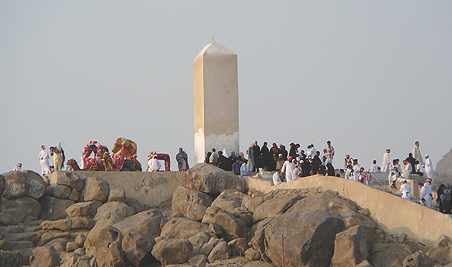
The last sermon of the Prophet-peace be upon him- is known as Khutbatul Wada'. It is mentioned in almost all books of Hadith. Following Ahadith in Sahih Al-Bukhari refer to the sermon and quote part of it. See Al-Bukhari, Hadith 1623, 1626, 6361) Sahih of Imam Muslim also refers to this sermon in Hadith number 98. Imam al-Tirmidhi has mentioned this sermon in Hadith nos. 1628, 2046, 2085. Imam Ahmed bin Hanbal has given us the longest and perhaps the most complete version of this sermon in his Masnud, Hadith no. 19774.
This Khutbah of the Prophet-peace be upon him- was long and it contained much guidance and instructions on many issues. The Prophet-peace be upon him- gave this sermon in front of a large gathering of people during Hajj.
Whosoever heard whatever part of the sermon reported it and later some scholars put it together. It is a great khutbah and we should all pay attention to its message and guidance. Following are the basic points mentioned in this khutbah:
O People
Lend me an attentive ear, for I know not whether after this year, I shall ever be amongst you again. Therefor listen to what I am saying to you very carefully and take these words to those who could not be present here today.
O People
Just as you regard this month, this day, this city as sacred, so regard the life and property of every Muslim as a sacred trust. Return the goods entrusted to you to their rightful owners. Hurt no one so that no one may hurt you. Remember that you will indeed meet your Lord, and that He will indeed reckon your deeds. Allah has forbidden you to take usury (interest); therefore all interest obligation shall henceforth be waived. Your capital, however, is yours to keep. You will neither inflict nor suffer any inequity.
Allah has Judged that there shall be no interest and that all interest due to Abbas Ibn ‘Abd al Muttalib (the Prophet's uncle) shall henceforth be waived.
Beware of Satan for the safety of your religion. He has lost all hope that he will ever be able to lead you astray in big things, so beware of following him in small things.
O People
It is true that you have certain rights in regard to your women, but they also have rights over you. Remember that you have taken them as your wives, only under Allah's trust and with His permission. If they abide by your right then to them belongs the right to be fed and clothed in kindness. Do treat you women well and be kind to them, for they are your partners and committed helpers. And it is your right that they do not make friends with anyone of whom you do not approve, as well as never to be unchaste.
O People
Listen to me in earnest, worship Allah, say your five daily prayers (Salah), fast during the month of Ramadan, and give your wealth in Zakat.
Perform Hajj if you can afford to.
All mankind is from Adam and Eve, an Arab has no superiority over a non-Arab nor a non-Arab has any superiority over an Arab; also a white has no superiority over a black, nor a black has any superiority over a white- except by piety and good action. Learn that every Muslim is a brother to every Muslim and that the Muslims constitute one brotherhood. Nothing shall be legitimate to a Muslim, which belongs to a fellow Muslim unless it was given freely and willingly. Do not therefor, do injustice to yourselves.
Remember one day you will appear before Allah and answer for your deeds. So beware, do not stray from the path of righteousness after I am gone. People, no prophet or apostle will come after me and no new faith will be born. Reason well therefore, O people, and understand words which I convey to you. I leave behind me two things, the Quran and the Sunnah (Hadith), and if you follow these you will never go astray. All those who listen to me shall pass on my words to others and those to others again; and may the last ones understand my words better than those who listened to me directly. Be my witness, O Allah, that I have conveyed your message to your people."
“…This day have I perfected your religion for you, completed My Grace upon you, and have chosen Islam for you as your religion…” (Quran 5:3)
Platform sharing ,economies of scale and Daihatsu Boon?

THE Inspira is supposed to inspire Proton lovers.
However, the rebadged Mitsubishi Lancer has drawn both brickbats and praises from Malaysian motorists.
The new Proton Inspira, which is due to be launched this week, has aroused many emotions - from Kinabatangan MP Datuk Bung Mokhtar Radin’s outburst in Parliament to our reader, Dominic Pillai, from Penang (see letter below).
Bung Mokhtar, also the backbenchers club's deputy chairman, said that Proton’s use of the Mitsubishi Lancer platform had embarrassed the nation.
“Proton said it would cost RM700 million to produce a new car. If it cannot afford (to design a new model), then just close down,” he said while debating Budget 2011.
Pillai contended that the Proton Inspira, with 26 per cent local content, should cost less than the fully imported CBU (completely built-up) Mitsubishi Lancer as sold in duty-free Langkawi at RM72,000.
The problem is not that Proton can’t develop its own car or that the Inspira is more expensive than its mechanical twin, the Mitsubishi Lancer.
Proton can and has developed its own cars and it knows its own costs. Reportedly, its R&D (research and development) costs for a new car would run to RM700 million, which is about the industry standard. The costs would be prohibitive due to our fragmented market of about 500,000 units a year.
For instance, the New Straits Times-Maybank Car of the Year awards are surveying 65 plus models of vehicles launched this year by 22 brands (23, if Ferrari is included).
The C-segment market, where the Inspira will compete, is too small for Proton to justify spending RM700 million in R&D and build a car from scratch.
Small market segment
With this small market segment, Proton is doing precisely what Perodua has done in 1998 – license a platform from its shareholder, Daihatsu, and build on it. Yet, no one questions why the Viva and the Myvi cost more than their mechanical twins in Japan.
Platform sharing is sound business sense and the French and the Japanese do it, ala Renault and Nissan.
China and the United States do it via Shanghai Automotive Industry Corporation (SAIC) and General Motors (GM) China. And those are huge markets by our standards.
China’s car market alone should hit 13 million units this year. Japan’s TIV (total industry volume) for 2009 was 4.6 million units while Western Europe’s TIV is estimated at 12.7 million units this year.
This is a good time for the politicians to study the case for Proton and the Malaysian car industry to be freed of the tariff walls that work both ways – it keeps out imports and it imprisons the Malaysian car industry within the tariff barriers.
If we believe that the Malaysian car industry is competitive enough, and there’s good reason to believe that companies like Tan Chong, Perodua, Proton, Naza and Nasim, just to name a few, are good enough, then the bigger volume of a regional market will bring costs down.
The higher price of the Inspira versus the Lancer in the free port of Langkawi is due to the cost of local content. Local assembly and local content means higher cost in the case of the small Malaysian market.
In terms of economies of scale, it is imperative that high capital costs in the automotive industry have to be tied to large volumes of production, as locally assembled vehicles using locally made parts will cost more than fully imported finished products.
The cost of the locally assembled car will increase in proportion to the percentage of local components, as the local market's small volume works against the economies of scale. It should be noted that conservatively, at least 200,000 units of a particular model are required to be produced annually to attain economies of scale.
An examination of the national car project should lead us to ask why Proton did not do more platform sharing earlier and reap lucrative profits as Perodua did. Why did it do so much national duty and at such costs to taxpayers?
Electric hybrid
And the answer was given by the founder of Proton himself. Last week, former prime minister Tun Dr Mahathir Mohamad announced that Proton would soon launch a hybrid electric car in co-operation with its subsidiary, Lotus, and another distinguished English car builder of noted racing heritage, Fraser Nash.
This is a marvellous leapfrog as Proton did not invest much in the traditional internal combustion engine. The signals are quite clear that the way ahead in the automotive industry is electrification.
One step that makes it more credible for Malaysia as a maker of new energy cars is that the government has cut all taxes on hybrid cars below 2,000cc this year. The Honda Civic Hybrid at the tax free price of RM108,000 compares well with the recommended retail price of about US$24,000 (about RM74,000) in the United States.
The way ahead is for the government to guarantee the permanent tax free status for new energy cars.
Starting with Proton, the easy entry of new energy cars will gradually make Malaysia a hub of new alternative energy vehicles.
This will eventually integrate Proton into the chain of world class vendors specialising in extended range electric vehicles.
Hopefully, the lesson is learnt that protection of a domestic market is not a tenable option when the ambition is to tap into regional and world markets.
CRZ beats World Car of the Year

While the Honda Insight is making its way to our shores later this year, Honda has picked up the coveted Japan Car of the Year Award for its new CR-Z two door sports hybrid car.
Rather interestingly the Japanese built CR-Z beat nine other contestants, among which was the 2010 World Car of the Year winner Volkswagen Polo and its fellow contender the Mercedes-Benz E-class.
The other contestants isn’t what you might call cars of weak character such as the BMW F10 5-series, Peugeot RCZ coupe, Jaguar XJ limousine, Toyota Mark X, Nissan March, Mazda Premacy/5, and the Suzuki Swift.
Top 10 cars for September 2010
Top 10 national vehicles
1. Proton Saga 5,582
2. Perodua Myvi 5,413
3. Perodua Viva 4,703
4. Proton Persona 3,181
5. Perodua Alza 2,343
6. Proton Exora 2,095
7. Proton Satria Neo 301
8. Proton Waja 239
9. Proton Gen2 147
10. Proton Savvy 46
Top 10 non-national vehicles
1. Toyota Vios 2,573
2. Toyota Hilux 1,275
3. Honda City 1,112
4. Nissan Grand Livina 1,133
5. Toyota Camry 803
6. Toyota Avanza 802
7. Mitsubishi Triton 641
8. Honda Civic 513
9. Honda Accord 506
10. Honda CR-V 503
ALONSO SHOWS HE DESERVES NOTHING


Sebastian Vettel has been crowned the 2010 Formula 1 World Champion after driving a remarkable race at the Abu Dhabi GP. Today’s achievement adds to Red Bull’s 2010 constructor’s title which the team bagged last week in Brazil. The youngest ever World Champion from Germany was the first driver to cross the finish line after starting from pole. His top rival, Ferrari’s Fernando Alonso who could have become champion if he finished in fourth place only managed seventh and lost the title by four points.
The double World Champion spent a lot of time behind Renault’s Vitaly Petrov and failed to overtake the Russian rookie and that pretty much took his championship chances away. Red Bull’s Mark Webber who was also a strong contender for the championship suffered from the same fate and spent the entire duration of the 55-lap race behind Alonso.
Vettel’s first place finish was accompanied by McLaren’s Lewis Hamilton who was closing the gap between himself and Vettel during the final few laps. Third place went to Hamilton’s teammate Jenson Button, champion of 2009. This meant that the podium of the 2010 Abu Dhabi GP at the Yas Marina circuit was made up by the 2008 champion (Hamilton), 2009 champion and of course of the freshly-crowned 2010 champion.
Fourth was taken up Mercedes’ Nico Rosberg while Renault’s Robert Kubica and Vitaly Petrov finished in fifth and sixth places respectively. Alonso crossed the line in seventh ahead of Webber while ninth and tenth spots were taken up by Jaime Alguersuari from Toro Rosso and Felipe Massa from Ferrari.
The best of the new comers is officially Lotus Racing as Heikki Kovalainen finished the race in 17th place ahead Virgin’s Lucas di Grassi. The Hispania duo Bruno Senna and Christian Klien finished in 19th and 20th. Jarno Trulli of Lotus who suffered from various issues including a broken rear wing managed 21st. The were only three retirements of the day and they were Timo Glock of Virgin, Michael Schumacher of Mercedes and finally Vitantonio Liuzzi of Force India.
All drivers had clean starts when the lights went green but Alonso slipped from third to fourth by the first corner. Vettel managed to maintain his lead and stayed up in front, ahead of both the McLaren drivers. Just moments later, within the first lap, Schumacher spun while exiting a corner and Liuzzi crashed straight into him. That caused the one and only Safety Car period of the race.
After the restart the top positions were maintain with Vettel leading the McLaren drivers, Alonso, Webber and Massa. Webber was the first of the top runners to pit after suffering tire issues. His pit stop then prompted Massa and subsequently Alonso’s pit stops. Many say that if Alonso didn’t pit as early as he did, he could have collected his third title. Unfortunately for the Spaniard, he got stuck behind Petrov until the very end of the race as the Russian already performed his pit stop during the Safety Car period earlier. Webber was also in the same train, behind Alonso.
Alonso tried his best to overtake Petrov but the Russian did an excellent job in keeping the title contender at bay. Today was the final race of the season and we will meet again next for the 2011 Bahrain GP on March 13th. Meanwhile expect more news from the high-adrenaline world of Formula 1 as teams perform winter testing with new Pirelli rubber, launch their new contenders and announce their drivers. We will also find out if Lotus Racing will be able to keep the “Team Lotus” designation.
Subscribe to:
Posts (Atom)