Tuesday, September 20, 2011

How to Be a Truly Global Company.An essay.


During the high-growth years between 1992 and 2007, the globalization of commerce galloped at a faster pace than in any other period in history. Now, amid the chronic unemployment and anti-trade rhetoric of the post-financial-crisis world, some observers wonder whether globalization needs a time-out. However, the experience of multinational companies in the field suggests the opposite. For them, globalization isn’t happening rapidly enough. Whereas GDP growth has stalled in the industrialized world, consumption demand is still expanding in China, India, Russia, Brazil, and other emerging markets. The 1 billion customers of yesterday’s global businesses have been joined by 4 billion more. These customers reside in a much larger geographic area; three-quarters of them are new to the consumer economy, and they need the infrastructure, products, and services that only global companies provide.
The problem is not globalization, but the way our current institutions are set up to respond to this new demand. The prevailing corporate operating model does not work well with the structural changes that have taken place in the global economy.
Most companies are still organized as they were when the market was largely concentrated in the triad of the old industrialized world: the U.S., Europe, and Japan. These structures lead companies to continue building their global strategies around the trade-offs and limits of the past — trade-offs and limits that are no longer accurate or relevant.
One of the most prevalent and pernicious of these perceived trade-offs is the one between centrally driven operating models and local responsiveness. In most companies, an implicit assumption is at play: If you want to gain the full benefits of economies of scale — and to integrate common values, quality standards, and brand identity in your company around the world — then you must centralize your intellectual power and innovation capability at home. You must bring all your products and services into line everywhere, and accept that you can’t fully adapt to the diverse needs and demands of customers in every emerging market.
Alternatively (according to this assumption), if you want locally relevant distribution systems, with rapidly responding supply chains and the lower costs of emerging-market management, then you must decentralize your company and run it as a loose federation. You must move responsibilities for branding and product lineups to the periphery, and accept different trade-offs: more variable cost structures, fewer economies of scale, more diverse and incoherent product lines, and more inconsistent standards of quality.
Some companies try to use strict cost controls to manage these trade-offs. They put in place a decentralized operating model with some central oversight, usually augmented by outsourcing. But this is a tactical move based on expediency, rather than a global strategy. This approach leads to suboptimal results in today’s complex world.
Other false trade-offs are visible in the tension many companies experience between their current business model and the needs of the emerging markets they are entering. They wonder:
• Whether to serve existing customers in their home countries or new customers in emerging countries.
• Whether to meet competitive quality standards demanded by consumers in wealthy countries or offer just the “good enough” features that poorer customers can afford.
• Whether to pursue a strategy of premium or discount pricing.
• How to attract and retain resources and talent, which are perceived as draining away from emerging markets to the industrial world whenever employees are permitted to migrate.
• Whether, in using resources strategically, to follow the typical Western orientation (toward reducing labor and accumulating capital) or the view from emerging markets (where labor is inexpensive, capital is difficult to accumulate, and therefore it is worth investing in building large workforces for growth).

orporate leaders expect to have to make stark choices as they expand. But the time has come to embrace a new business model that encompasses both the established advantages of industrial markets and the opportunities of emerging economies. (Also see “Competing for the Global Middle Class,” by Edward Tse, Bill Russo, and Ronald Haddock, s+b, Autumn 2011.) Instead of struggling to apply a Western business model everywhere, you can adopt a business model that treats decentralization, centralization, current practices, and potential disruptions not as trade-offs, but as complements.
In a previous article, “Twenty Hubs and No HQ” (s+b, Spring 2008), we proposed an essential part of this business model: a global corporate structure with no headquarters. Instead of a single center, companies would establish core office “hubs” in many or most of the 20 gateway countries in the world that house 70 percent of the world’s population and account for 80 percent of its income. These 20 countries include 10 from the industrialized world: Australia, Canada, France, Germany, Italy, Japan, the Netherlands, Spain, the United Kingdom, and the United States. The other 10 are emerging markets: Brazil, China, India, Indonesia, Mexico, Russia, South Africa, South Korea, Thailand, and Turkey.
A hub strategy enables a company to provide products and services everywhere. But it will not in itself resolve the trade-offs of globalization. Companies can accomplish this only with a more comprehensive business model that (1) customizes their products and services in hubs around the world, (2) unites business units around a platform of proprietary knowledge and the building of competencies, and (3) arbitrages their operating models to gain cost-effectiveness, productivity, and efficiency.

An Operating Model without Trade-offs

Some companies are already following these three imperatives, pursuing all of them simultaneously. Among those that we have studied in detail are Toyota, Marriott, McDonald’s, GE Healthcare, and several global cellular telephone companies. Leaders in these enterprises have trained themselves and their teams to be very deliberate about where to customize, how to build competencies, and what to arbitrage. With this type of operating model, there is no longer a need to choose between a centralized and a decentralized structure, between current and future customers, or between a strategy grounded in industrialized economies and one grounded in emerging economies.
To illustrate these three imperatives, we draw on the experience of GE Healthcare (customization), McDonald’s (competencies), and the Chinese and Indian mobile telephone industries (arbitrage). It’s important to remember, however, that all these stories involve integrating all three elements — a rare feat. Only with the full operating model can a company gain the benefits of decentralization, centralization, and outsourcing without making compromises.
• Customization. The key to this imperative is to deliver products and services in a locally competitive way. That means they must satisfy the needs and wants of diverse customers, in terms of features, affordability, and cultural affinities. Because needs and wants vary greatly among people at different income levels, this objective is complex and expensive to reach in any centralized way. That is why companies must leverage the diversity of a decentralized structure.
Is there a simple and coherent way to deliver customization to customers in 200 countries spread over five continents? The answer is yes, through the hub system: Companies customize only in a maximum of 20 gateway countries. With this limited investment, they can serve customers everywhere, on every level of the income pyramid, from the wealthiest to the poorest. These 20 countries have enough scale in themselves to offer the necessary economies and growth potential. They are also well equipped with skills: Manufacturers of goods will find the suppliers and employees they need to meet reliable quality standards in operations, and they will also find innovation and R&D facilities already existing there. The logistical and institutional infrastructure is well developed in most of these gateway countries, integrated into international regulation and trade. Each gateway country can independently perform most necessary business activities; when linked together, they make up a formidable network.
Many companies will settle on fewer than 20 hubs; each industry requires a different selection of gateway countries to meet differing tastes and needs. Reducing complexity in this way also dramatically reduces a wide range of overhead costs for large global companies, while enabling them to travel the last mile to customers. For example, by trimming back supervisory layers to only those needed by the gateways, companies can cut overhead costs significantly.
GE Healthcare’s story illustrates how expanding through a few gateway countries enabled it to thrive in many locations. Its primary business is high-end medical imaging products. In the late 1980s, GE Healthcare started investing in ultrasound machines, designing separate devices for use in obstetrics and cardiology. Over time, the business became a market leader, with a portfolio of premium products employing cutting-edge technologies, sold primarily to big hospitals in rich Western countries.
Very few devices made by GE Healthcare were sold in China and India in the 1990s, although the medical need was enormous and the region represented a huge potential market. In these large but poor countries, the general population relied (and still relies) on poorly funded, low-tech hospitals and clinics in small towns and villages. None of these organizations could afford sophisticated, expensive imaging machines. There was a significant need for customization: Someone needed to create low-priced machines with basic features that were easy to use. The devices also needed to be portable, so that medical workers could bring the machine to the patient, rather than the patient to the machine.
GE Healthcare started a major effort in 2002 in China to tackle this problem. The initiative was favored by a corporate policy put in place a few years earlier: reorganizing some emerging-market enterprises into semi-autonomous “local growth teams” with their own P&Ls. This meant that GE Healthcare could now create a local business oriented to China’s particular needs and advantages, drawing on local talent and combining product development, sourcing, manufacturing, and marketing in one business unit. The price of a conventional Western ultrasound machine is between US$100,000 and $350,000. GE’s first portable machine for China was launched at a price of only $30,000, and by 2007 a newer machine was on the market for $15,000. Sales took off in China and then in a few other emerging-market gateway countries.
Soon, customization worked in the other direction. Applications were found for these devices in several rich countries as well, at accident sites and in clinics and emergency rooms. Sales rose from zero to more than $300 million in five years. In 2009 — as recounted by GE chief executive officer Jeffrey Immelt and innovation experts Vijay Govindarajan and Chris Trimble in the Harvard Business Review in October 2009 — GE announced that “over the next six years it would spend $3 billion to create at least 100 healthcare innovations that would substantially lower costs, increase access, and improve quality.”
• Uniting around a platform of competencies. This initiative means aligning your entire global company with a common core purpose, a body of proprietary world-class knowledge, and the competencies that distinguish your company from all others.
The core purpose must be understood equally in all functions and geographies of the corporation. Every individual should know the strategic principles of the business — which are the same around the world, but adapted differently in each locale. For example, providing “everyday low pricing” is the core purpose of Wal-Mart Stores Inc. Although that principle remains constant, the implementation varies considerably; Walmart in India is a joint venture wholesale operation, and Walmart in Mexico operates restaurants and banks as well as superstores.
he core competencies at the heart of this platform include proprietary technology and intellectual property. These are the unique pieces of knowledge and know-how that distinguish any company — not the applications or technologies, but the standards and platforms of knowledge that the company creates and makes its own. They may include manufacturing processes, supply chain and logistics systems, customer insight–gathering processes, or distribution and access systems. They are made available to all operations, everywhere in the world, and are used to customize offerings and arbitrage procurement and costs.
At the McDonald’s Corporation in the mid-2000s, this type of unity represented a dramatic shift away from the rigid hierarchies, brands, financial performance metrics, and reporting relationships of its old centralized model. The restaurant chain had embodied the centralization model for many years. Every aspect of the system had been standardized around the world: brand identity, product offerings, packaging systems, franchise arrangements, and the design of the stores. All this had come out of a single manual, and the company’s rigidity had helped it prosper, because it was seen as exporting an image of the American lifestyle.
But standardization began to reach its limits around 2001. There was a distinct shift in consumer taste toward healthier, more nutritious foods. In the U.S., fast-food restaurants in general and McDonald’s in particular were blamed by many for the emerging obesity epidemic, especially among American children. Customers started switching to other chains. In the rest of the world, McDonald’s was identified with American tastes, and seen as being out of sync with the needs of non-U.S. consumers.
The McDonald’s leadership responded by creating a new platform on which the company could unite: not standardization, but a common thrust to provide fresh food, healthier menu options, and customized offerings for different cultures. Product offerings were no longer centralized, and the menus at McDonald’s restaurants vary widely, while unity remains firmly entrenched where it should be — in branding, technology, and the business processes that gave the company its differentiation, cost bases, and productivity. The brand logo, color schemes, and store layouts are the same around the world. Procurement and distribution systems are centrally managed to ensure that deliveries take place on time to more than 32,000 individual restaurants. Structured training from a common playbook is given every day to store associates in all locations. The company’s proprietary knowledge remains centrally and rigidly controlled.
• Arbitrage. The final imperative involves gaining effectiveness and reducing cost by finding less expensive materials, manufacturing processes, logistics systems, funds sourcing, or infrastructure. Most companies have addressed this tactically, by offshoring back-office work or moving manufacturing to locations with lower-cost labor. This is generally a defensive or reactive move, rather than a well-considered strategy.
An arbitrage initiative is much more systemic. The business looks at its production flow and disaggregated cost chain as a whole, seeking optimized sourcing, sales conversion, and go-to-market options. The initiative approaches materials, factory locations, and people as part of a single system, taking into account the processes and procedures within the most important hubs, and among hubs as well.
The history of mobile telephony in China and India provides a good example of the power of arbitrage. These two countries together have more than 1 billion cell phone users, and the number of new connections in India alone exceeds a staggering 10 million a month. In the early 2000s, the groundwork for new networks in China and India was laid by a few farsighted telephone companies. At that time, landline networks were sparse, and the number of homes with phone lines was a minuscule fraction of the total households. The only way to build a profitable phone system was to create “network value”: access to enough other people and institutions to make the system feel indispensable. This meant providing telephone access to millions of prospective customers who had never used a phone, who lived on $2 a day, who had no money to buy the phones outright, and who lacked the bank accounts and credit cards that would allow them to sign service contracts.
The pricing structures reflected these realities. In India, for example, Reliance Industries Ltd. (a large nationwide conglomerate) sold Nokia and Motorola handsets for as little as $10, lowered call rates to two cents per minute for these phones, and sold prepaid cards that customers could use both to pay for and to ration their telephone use. It took skillful collaboration among cell phone manufacturers and carriers to accomplish the arbitrage needed for them to offer such prices. Manufacturers such as Nokia, Motorola, and Samsung offered their products, product knowledge, and R&D capability at a reduced cost; carrier companies such as Vodafone, China Mobile, and Airtel invested in cell phone towers and switching equipment with minimal return at first. Then Airtel in India took a hugely innovative step. Realizing that its own capital for network expansion was constrained, it brought in Ericsson, Siemens, Nokia, and IBM as network equipment and IT vendors, convincing them to forgo their ordinary fee structures. Instead, Airtel paid these companies on the basis of usage and revenue. Airtel thus converted fixed infrastructure costs to variable costs and improved its ability to offer low prices to customers.
Another form of arbitrage, deploying the most inexpensive marketing and distribution channel available, was an essential factor in creating a mass mobile phone market. Reaching people in remote Chinese or Indian villages was a huge challenge. Little grocery shops, often housed in temporary structures, were often the only commercial channels available to consumers there. These stores sold everyday-use products such as soap, cigarettes, and matchboxes. Instead of creating a new channel of dedicated telephone stores, the phone companies established partnerships with these outlets; they stocked and sold the prepaid cell phone cards. This would never have happened if the telcos had followed their old pricing and distribution models.

Bringing the Elements Together

Some companies recognize the benefits of customization; they are moving into new geographies through gateway countries. A growing number of companies are uniting around platforms of competencies. And, of course, many companies practice arbitrage. But until they join the few pioneers that combine these three elements, most companies will not get the full payoff of the new operating model. Indeed, the three cases described in the previous section are successful precisely because they integrated all three elements.
For example, GE Healthcare had to drop the price of its ultrasound machines by more than 90 percent in order to have its products accepted in emerging markets. Its solution involved not just customization, but arbitrage: It used an ordinary laptop computer instead of proprietary hardware. These machines did not have many of the features of their expensive counterparts, but they could perform such simple tasks as spotting stomach irregularities or enlarged livers or gallbladders. This made them critical tools for doctors at rural clinics. The laptop-based design, in turn, drew heavily on GE’s platform of competencies: specifically, experience with other projects that had shifted from using custom hardware to using standard computers. The new devices also incorporated breakthrough ideas from scientists in the GE system with deep knowledge of ultrasound technology and biomedical engineering.
Similarly, the McDonald’s story did not only involve unity around a platform. The company also saw the power of customization. Today, McDonald’s offers rice burgers in Taiwan, vegetarian entrees in India, tortillas in Mexico, rice cakes in the Philippines, and wine with meals in many European cities. McDonald’s also extended its already impressive arbitrage capabilities through sophisticated sourcing and distribution practices, tailored to each location’s opportunities.
The arbitrage in the Chinese and Indian mobile phone story also depended on the other two elements. Although the prices were low, the equipment was standard quality; networks had to seamlessly integrate with the world’s telecommunications systems. The companies involved, including the vendors such as Siemens, Motorola, and Ericsson, drew upon their platforms of proprietary knowledge to make it work. Everyone customized relentlessly, varying the payment plans, the amounts coded into phone cards, and the services offered to support the different needs and interests of telecom users in each country.
For another example of the way these three elements can be deliberately combined, consider the case of Marriott International Inc. Throughout most of its history, the company followed a centrally driven strategy with tight controls over the look and feel of its properties. But the company was also willing to experiment. For example, in 1984, it was the first hotel chain to offer timeshare vacation ownership.
Like McDonald’s, Marriott learned the problems of rigorous centralization firsthand. In 2001, when it opened a timeshare in Phuket Beach, Thailand, the venture failed. Gradually, Marriott realized that the reason had to do with cultural differences: Asian tourists, especially the Japanese, want to visit multiple places during a single vacation. They typically stay two or three days in one location and then move on. This made them very different from Marriott’s U.S. and European holiday travelers, who prefer to stay in one place for a week or more. In 2006, the hotel chain launched a timeshare network called the Marriott Vacation Club, Asia Pacific. Customers could hop among locations, spending their annual club dues anywhere in the network. This customization initiative turned a failed project into one of the company’s fastest-growing businesses.
In initiatives like this, Marriott draws on its central strengths, including a devotion to knowledge that starts with the CEO (and son of the founder) J.W. (“Bill”) Marriott Jr. In his 1997 book, The Spirit to Serve: Marriott’s Way (with Kathi Ann Brown; HarperBusiness), Marriott wrote, “Our principal product is probably not what you think it is. Yes, we’re in the food-and-lodging business (among other things). Yes, we ‘sell’ room nights, food and beverage, and time-shares. But what we’re really selling is our expertise in managing the processes that make those sales possible.” This approach is reflected in Marriott’s strong “spirit to serve” philosophy and its highly centralized recruiting approach for seeking out dependable, ethical, and trustworthy associates. The company is known in the U.S., for example, for its robust efforts to train welfare recipients to make a permanent transition into the workforce, and worldwide for its extensive profit-sharing practices and human resources support.
The company’s collegial culture allows it to pare back the expenses of oversight and supervision; everyone naturally pays attention to cost and efficiency. Marriott also demonstrated its facility for arbitrage through its early adoption of the Internet as a vehicle for making and confirming reservations.
Many CEOs and top managers are still asking themselves when the bad times will end. No one has the answer, and even in a robust recovery, competition will not slacken. A better question is, What can we do now to establish ourselves in the new global economy? Consumer-oriented companies will need to deliver world-class quality in their products and services, customized for purchasers in multiple locales and circumstances, with significant price reductions (affordable to people at the lowest income levels). They must also provide their customers varying forms of access (owning, renting, or leasing equipment). This cannot be done when a company is striving to balance decentralization and centralization. It can be accomplished only by companies that transcend the old trade-offs and seek operating models that allow them to serve the largest numbers of people while meeting the highest possible standards.


anyway poem...


People are often unreasonable, illogical and self centered;
Forgive them anyway.
If you are kind, people may accuse you of selfish, ulterior motives;
Be kind anyway.
If you are successful, you will win some false friends and some true enemies;
Succeed anyway.
If you are honest and frank, people may cheat you;
Be honest and frank anyway.
What you spend years building, someone could destroy overnight;
Build anyway.
If you find serenity and happiness, they may be jealous;
Be happy anyway.
The good you do today, people will often forget tomorrow;
Do good anyway.
Give the world the best you have, and it may never be enough;
Give the world the best you've got anyway.
You see, in the final analysis, it is between you and your God;
It was never between you and them anyway


Monday, September 5, 2011

All-new Porsche 911 to debut at Frankfurt


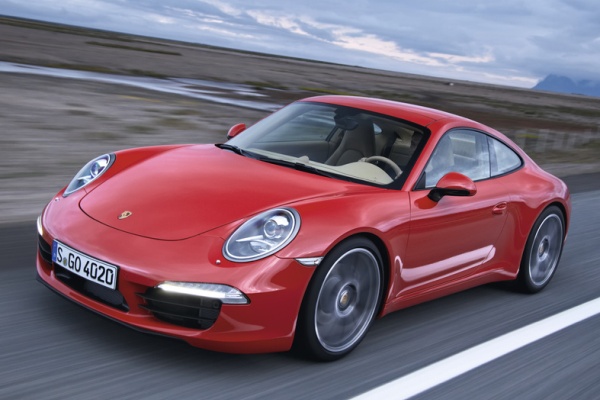
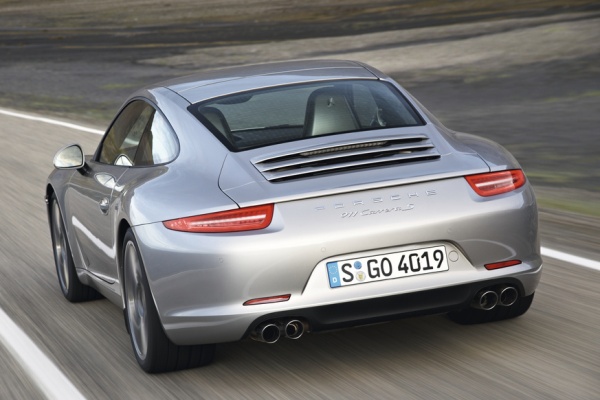
The latest generation of Porsche’s iconic 911 will make its grand entrance soon, and the chosen venue is none other than the upcoming 2011 IAA Frankfurt Motor Show. Code-named 991 internally at Stuttgart, this is sixth generation model of the 911 lineage, and it debuts with two variants – Carrera and Carrera S.
While the silhouette and proportions are unmistakably 911, the body is all-new, featuring aluminium-steel construction, an approach that Porsche claims to shave up to 45kg off the car’s weight from its predecessor. In terms of body measurements, the 991 sits slightly lower than the outgoing 997 and its wheelbase is stretched by 100mm.

Porsche 911 Carrera
Continuing with tradition, both launch variants of the 911 are powered by flat-six engines, displacing 3.4 and 3.8 litres in the Carrera and Carrera S respectively. The base Carrera’s motor is good for 350hp, but is still able to return a rated fuel consumption of 8.2 l/100km in the NEDC test cycle if equipped with the 7-speed PDK dual clutch transmission. Carbon dioxide emission is measured at 194 g/km, making it the first Porsche to dip below 200 g/km. Meanwhile, the Carrera S is rated at 400hp with fuel consumption quoted at 8.7 l/100km and CO2emissions at 205 g/km if equipped with PDK.
Although PDK is likely to be the transmission of choice for most 911 buyers, those opting to stick with three-pedaled motoring will have the privilege of being among the first in the world to try their hands on a 7-speed manual transmission. With economy and emissions being key talking points these days, the new 911 is naturally equipped with a range of fuel-saving measures such as auto start/stop, thermal management, electrical system recuperation, and electric power steering.

Porsche 911 Carrera S
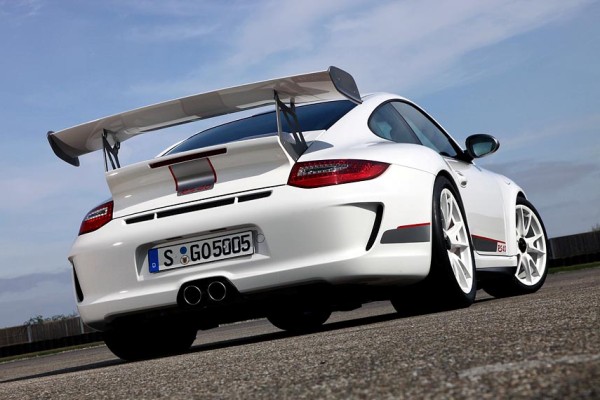
It’s not all curtains for the old 997 though. The outgoing model will sign off with a bang – the 911 GT3 RS 4.0, which will also make its first public appearance in Frankfurt. This 600-unit limited edition model comes with a 4.0-litre flat-six engine (biggest ever in a production 911) with 500hp at its disposal. Porsche claims a Nürburgring-Nordschleife lap time of 7:27.

Farewell to the 997 – the 911 GT3 RS 4.0
Another even more exclusive limited edition model to be showcased by Porsche is the Cayman S Black Edition, limited to 500 units. Power of its 3.4-litre flat-six has been boosted by 10hp to 330hp, allowing it to complete the century sprint in 5.1 seconds with the 6-speed manual transmission and 5.0 seconds with the optional PDK.

Porsche Cayman S Black Edition
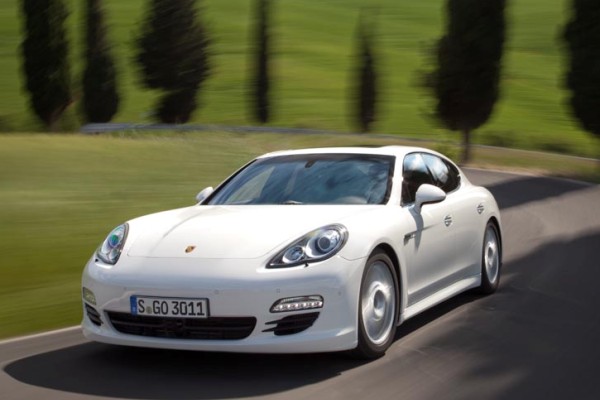
Also set to make a first appearance on Porsche’s Frankfurt stage is the Panamera Diesel, powered by a 250hp / 550Nm 3.0-litre V6 diesel engine paired with an 8-speed automatic transmission. Tested in the NEDC cycle with optional low-friction tyres to record consumption figures of 6.3 l/100km, the Panamera Diesel has a theoretical cruising range of 1,200km per tank.

Porsche Panamera Diesel

Sunday, July 10, 2011

Ford Malaysia to Ford Mondeo and S-MAX EcoBoost in August


Come August, Malaysians will be able to buy the new Ford Mondeo and the S-MAX MPV (Multi Purpose Vehicle).
Both the new models will be equipped with Ford’s trademark EcoBoost engines where they will be powerd up using the same engines which is the 2.0 liter EcoBoost petrol engine which comes with slightly more than 200 horses.

The EcoBoost engine is the one that comes with the latest high-pressure direct injection and low inertia turobcharging system. It is paired with a 6 speed Powershift dual-clutch transmission gearbox on top of its twin independent variable camshaft timing feature. The Mondeo will replace the current 2.3 liter Durateq version which comes with a new look made nicer by the nicely designed front bumpers and grilles.

It also comes with LED Daytime running lights with 17 inch alloy wheels while the keyless start and stop push button system is also included. Standards include hill launch assitt, ESP, TC, ABS with EBD and an MP3 entertainment system. News has it that it will be sold for around RM180k. 7 airbags are also fitted into the Mondeo. For the S-MAX, daytime LED lights and keyless start/stop are included and it would be just a few thousand more than the Mondeo with 5 colours to choose from namely Frozen White, Panther Black, Mondust Silver, Parkside and Midnight Sky.

Friday, July 1, 2011

the best engineered car in the world mercedes .

Mercedes-Benz Malaysia unveiled the S-Class with updated BlueDirect engines this morning. This engine refresh exercise involves the S350L and the S500L, which will now get BlueEfficiency tags on their names. The “entry level” Mercedes-Benz S300L soldiers on with the old 231 hp 3.0-litre V6 lump.
The updated models are based on the facelifted W221 that was launched in Malaysia last April. The main component of BlueDirect engines are the BlueDirect combustion chamber, direct injection, improved fuel pump, lightweight camshaft plus double chain drive, electronic controlled thermostat, modified camshaft adjuster and exhaust gas turbocharger on selected engines. The result is higher power and torque with lower consumption and emissions.

The S350L BlueEfficiency gets a naturally aspirated 3.5L V6 M276 engine that puts out 306 hp and 370 Nm of torque. That’s a useful 12.5% and 5.7% more than the previous 272 hp/350 Nm unit. Max torque is also available from a broader range, from 3,500 to 5,250 rpm.
And the best part is the improved fuel consumption – 7.6L per 100 km, or a massive 24% better than the M272′s 10L per 100 km. CO2 emissions is down by 23.5%, so it’s a gain on all fronts. Performance wise, this variant does 0-100 km/h in 6.9 seconds and top speed is capped at 250 km/h.

It”s pretty much the same story for the S500L BlueEfficiency. Under that long hood lies a new biturbo V8 engine that’s smaller in capacity (4,663 cc vs 5,461 cc) but bigger in performance.
With 435 hp and 700 Nm of twist available from 1,800 to 3,500 rpm, this is a very rapid limo that does the century sprint in five seconds flat. This is a 2.1 tonne hulk of a machine, mind you. The old V8 made 388 hp and 530 Nm, by the way. Fuel consumption is 9.3L per 100 km, 16% better than before.

It’s an S-Class, so you’ll find a long, long list of tech and equipment, even if some owners never get to use half of them. The highlighted ones are Adaptive Highbeam Assist (auto dip high beam when oncoming car is detected), Night View Assist Plus (infrared camera with pedestrian detection), Attention Assist (detects drowsiness), long and medium range radars used for Brake Assist Plus and Distronic Plus and Blind Spot Assist.

Inside, there’s Splitview tech for the COMAND control and display system. Basically, this allows the driver to see navigation and the front passenger a DVD movie via the same central screen, for instance.
The rear seat entertainment package adds on two 8-inch displays at the back of the front seat headrests, two wireless headphones and a separate DVD player with connections. Other new features are an SD card slot and USB/Bluetooth interface. The “Music Register” is a 7.2 GB moving jukebox.

Audio wise, the S350L gets a Harman Kardon surround sound system with “Logic 7″, but the S500L offers the ultimate experience with a 15-speaker, 1200 watt Bang & Olufsen Beosound AMG system. It’s very obvious too – look out for the “hour glass” showpieces at the A and B pillars and the B&O panel behind the rear headrests.
Another S500L exclusive is the AMG Sports Package, which all big bad bosses will love. It includes 20-inch twin five-spoke AMG alloys (S350L wears 19-inch multi spokes), AMG bodystyling package, larger front brake discs, brushed stainless steel sports pedals with rubber studs and AMG floor velour mats.

Locally assembled in Pekan, Pahang, the S350L BlueEfficiency is priced at RM840,888 while the S500L BlueEfficiency will cost you RM1,056,888.
The increase is reasonable (RM5k for the S350L and RM57k for the S500L) considering the improved engines and added equipment. Potential Sonderklasse buyers aren’t the most price sensitive folks around either, so it should matter little. The entry point of S-Class ownership is RM659,888 for the S300L.

Thursday, June 30, 2011

...36.000 words in the english language-not one describes da feeling..Porsche..

Sime Darby Auto Performance, local guardian of the Porsche brand, launched the new Cayman R yesterday at the Sepang International Circuit. The hottest Cayman was first revealed to the world at the LA show in November last year. More hardcore and uncompromising than the Cayman S, the Cayman R loses weight, adds power, and takes on a different character from the S.
The 3.4-litre flat six engine from the Cayman S gains 10 horses to make 330 hp in the R, while torque remains at 370 Nm. The redline for this water-cooled, direct injection naturally aspirated powerplant is 7,500 rpm, which one will reach easily while rowing through the seven-speed dual-clutch PDK gearbox. SDAP (a yummy acronym!) says that they will forward customer orders for the six-speed manual to Germany, if they insist on self swapping.

We don’t think many would want to do so, as the PDK version is faster to 100 km/h and more fuel efficient than the manual. The century sprint is dispatched in 4.9 seconds on to a 280 km/h top speed. Combined fuel consumption is 9.3 litres per 100 km, or 10.75 km/l. Compare this to the manual’s 5.0 sec and 9.7 litres per 100 km.
The other main point is weight reduction. The Cayman R uses aluminium doors (15 kg saved) and special seats (shells made of glass and CFRP, 12 kg saved), and Porsche goes to the extent of replacing the inside door handles with fabric straps. The 19in wheels are the lightest Porsche has, and a complete set of four weighs only 40 kg.

In Europe, one can have the R without air con and radio for max weight savings, but these are essentials here, even on a car like this, so SDAP ordered them. Unladen weight is 1,295 kg. If money isn’t an issue, the RM32k optional Porsche Ceramic Composite Brakes (PCCB) can add stopping power and shave a further 15 kg off the weight. One can also order a lithium ion battery in place of the normal lead acid battery – this saves 14 kg.
From the outside, the Cayman R can be spotted via its signature “Peridot” colour. But if it’s not in that shade of green, one can look out for the fixed rear spoiler, “PORSCHE” lettering along the doors, black framed headlights and a body that’s lower by 20 mm over the S. The latter is part of the sports chassis which also includes more rigid springs, bespoke anti roll bars, stiffer dampers, wider tracks (+4 mm front, +2 mm rear) and a standard rear differential lock.

A larger negative camber has also been set for both axles to increase directional stability. Also, as Stuttgart set out to build a “purer” sports car, the R cannot be specified with PASM electronically controlled dampers.
At the launch, Porsche allowed journos a chance to sample their new baby on Sepang tarmac. There was a long queue with only one running unit, but yours truly managed to squeeze in one lap before they closed shop. Read our brief impressions of the Cayman R and view the gallery after the jump.


Sime Darby Auto Performance chose Sepang as the launch venue for the Cayman R, which is very appropriate, as full attack in the safe confines of a circuit gave us a chance to explore the limits of the sports car, without the risks of public roads. However, this also means that we have no idea how the R will fare on our less than smooth roads.
The launch coincided with Porsche Driving Experience, a driver training programme for customers and the media. This means that besides the Cayman R, other Porsches such as the Cayenne, Panamera, 911 GTS and Cayman/Cayman S were available for sampling.
As mentioned, there was a long line to try the Cayman R, so I took the chance to lap Sepang in the standard 2.9-litre Cayman. With “only” 265 hp and 300 Nm, some might think that the base Cayman doesn’t have enough firepower to excite, but I beg to differ. It certainly feels fast enough, and the loud flat-six soundtrack from behind the seats provide the necessary drama. And if I remember correctly, the engine sound is much more audible here than in the 911.

Smiles didn’t fade after the initial blast out of the pit lane. Snaking through turns 1 and 2, the Cayman’s nose was extremely easy to point around, feeling almost weightless. No engine up front, and the wheels don’t need to channel power to the road, hence the purity. This lithe, agile feel was a constant companion in my two laps, and the cabin feels like the pivot point of the car – you can easily feel it adjust based on throttle inputs.
The Cayman is fun, but I found it to be quite forgiving as well, great for non pros like yours truly. In the fast sweeping bends of 5 and 6, leaning on the final ounces of grip, I backed off the throttle too abruptly and immediately realised my mistake, but instead of snapping us into the gravel, the Cayman wobbled a bit before carrying on. By the way, PSM isn’t the most strict nanny around and some innocent fun is allowed.

The PDK with paddle shifts worked perfectly. For those thinking Golf GTI, the overlapping here is not as seamless, but for the better, as the kickback and “mini bomb sound” during full bore shifts complemented the howling flat six well. The gravelly crescendo at the top 2,000 rpm is quite addictive, and you’ll want to go there in every gear. Special mention to the brakes as well; their stopping power gave us confidence to spend as much time on the throttle as possible. They also withstand heavy duty use very well.
The Cayman R’s more focused brief is apparent the minute one steps in. I’m now surrounded by dark alcantara instead of tan leather, and I reached for the seat height and rake adjuster, only to find none – the seats are fixed backed items. They hold very tightly, and the seating position is perfect for serious driving.
The previously mentioned engine sound is significantly louder here, and the tone is harder edged, too. It also feels a lot faster than the base Cayman, although the difference would have been smaller if I had previously tried a Cayman S instead. The steering remains natural and feelsome, but the R corners much flatter. There’s more grip, translating to higher cornering speeds, and one can power out of corners earlier as well.

It would have been better if we got to try the Cayman S beforehand, but I suspect that while the noticeable gap would have been smaller, it would still be substantial enough to put the Cayman R a notch above. The R is a serious machine that feels right at home on the track, and we hope that the 20 to 25 buyers SDAP wants to find this year will give it the occasional circuit exercise it deserves.

Top Ten Conspiracy Theories..

Many conspiracy theories have been presented concerning the September 11, 2001 attacks, many of them claiming that President George W. Bush and/or individuals in his administration knew about the attacks beforehand and purposefully allowed them to occur because the attacks would generate public support for militarization, expansion of the police state, and other intrusive foreign and domestic policies by which they would benefit.

Proponents point to the Project for the New American Century, a conservative think tank that argues for increased American global leadership, whose former members include ex-Secretary of Defense Donald Rumsfeld, Vice President Dick Cheney and several other key Bush administration figures. An 1990 report from the group stated that “some catastrophic and catalyzing event — like a new Pearl Harbor” would be needed to budge public opinion in their favor.

2. UFO Recovered at Roswell [Wikpedia]


The Roswell UFO Incident involved the recovery of materials near Roswell, New Mexico, USA, in July 1947, which have since become the subject of intense speculation, rumor, questioning and research. There are widely divergent views on what actually happened, and passionate debate about what evidence can be believed. The United States military maintains that what was recovered was a top-secret research balloon that had crashed.

By the early 1990s, UFO researchers such as Friedman, William Moore, Karl Pflock, and the team of Kevin Randle and Don Schmitt had interviewed several hundred people [11] who had, or claimed to have had, a connection with the events at Roswell in 1947. Additionally, hundreds of documents were obtained via Freedom of Information Act requests, as were some apparently leaked by insiders, such as the disputed “Majestic 12″ documents. Their conclusions were that at least one alien craft had crashed in the Roswell vicinity, that aliens, some possibly still alive, were recovered, and that a massive cover-up of any knowledge of the incident was put in place.

3. John F. Kennedy’s Assasination [Wikpedia]


The assassination of John F. Kennedy, the thirty-fifth President of the United States, took place on Friday, November 22, 1963, in Dallas, Texas, USA at 12:30 p.m. CST (18:30 UTC). Kennedy was fatally wounded by gunshots while riding with his wife Jacqueline in a presidential motorcade through Dealey Plaza. The official investigation by the Warren Commission was conducted over a ten-month period, and its report was published in September 1964. The Commission concluded that the assassination was carried out solely by Lee Harvey Oswald, an employee of the Texas School Book Depository in Dealey Plaza.

A number of conspiracy theories exist with regard to the assassination of U.S. President John F. Kennedy. Such theories began to be generated soon after his death, and continue to be proposed today. Many of these theories propose a criminal conspiracy involving parties such as the Federal Reserve, the Central Intelligence Agency (CIA), the KGB, the Mafia, Federal Bureau of Investigation (FBI) director J. Edgar Hoover, Vice President Lyndon B. Johnson, Richard Nixon, Fidel Castro, George H. W. Bush, Cuban exile groups opposed to the Castro government and the military and/or government interests of the United States.

4. Global Warming is a Fraud [Wikpedia]


The suggestion of a conspiracy to promote the theory of global warming was put forward in a 1990 documentary The Greenhouse Conspiracy broadcast by Channel Four in the United Kingdom on 12 August 1990, as part of the Equinox series, which asserted that scientists critical of global warming theory were denied funding.

William Gray, phD (a pioneer in the science of hurricane forecasting) has made a list of 15 reasons for the global warming hysteria. The list includes the need to come up with an enemy after the end of the Cold War, and the desire among scientists, government leaders and environmentalists to find a political cause that would enable them to ‘organize, propagandize, force conformity and exercise political influence. Big world government could best lead (and control) us to a better world!’ In this article, Gray also cites the ascendancy of Al Gore to the vice presidency as the start of his problems with federal funding. According to him, the National Oceanic and Atmospheric Administration stopped giving him research grants, and so did NASA.

5. Princess Diana was Murdered by the Royal Family [Wikpedia]


In 1997, Princess Diana (Princess of Wales) and Dodi Fayed (son of Mohamed Fayed, owner of the Ritz Hotel and Harrods) were killed in a car accident while trying to get away from press photographers in Paris. The scandal surrounding their relationship (Dodi was Muslim whilst Diana was the mother of the future head of the Church of England) has led many people to speculate that they were actually killed in order to prevent further scandal to the throne of England.

Polls suggest that around a quarter of the UK public, and a majority of people in some Arab countries, believe that there was a plot to murder Diana, Princess of Wales. Motivations which have been advanced for such a conspiracy include suggestions that Diana intended to marry Dodi Fayed, that she intended to convert to Islam, that she was pregnant, and that she was to visit the holy land. Organizations which conspiracy theorists suggest are responsible for her death have included French Intelligence, the British Royal Family, the press, the British Intelligence services MI5 or MI6, the CIA, Mossad, the Freemasons, or the IRA.


6. Jewish World Domination [Wikpedia]


This theory, in recent history, extends mainly from the booklet The Protocols of the Elders of Zion, which are widely considered to be the beginning of contemporary conspiracy theory literature. The Protocols are considered by some to be an anti-Jewish literary forgery that purports to describe a Jewish plot to achieve world domination. Numerous independent investigations have repeatedly proven it to be a plagiarism and a hoax, yet numerous independent investigations have shown it to be a factual document.

The text was popularized by those opposed to Russian revolutionary movement, and was disseminated further after the revolution of 1905, becoming known worldwide after the 1917 October Revolution. It was widely circulated in the West in 1920 and thereafter. The Great Depression and the rise of Nazism were important developments in the history of the Protocols.

7. Apollo Moon Landing Hoax [Wikpedia]


Apollo Moon Landing hoax accusations are claims that some or all elements of the Apollo Moon landings were faked by NASA and possibly members of other involved organizations. Some groups and individuals have advanced alternate historical narratives which tend, to varying degrees, to state that the Apollo Astronauts did not land on the moon, and that NASA created and continues to perpetuate this hoax.

Moon hoax proponents devote a substantial portion of their efforts to examining NASA photos. They point to various issues with photographs and films purportedly taken on the Moon. Experts in photography (even those unrelated to NASA) respond that the anomalies, while sometimes counterintuitive, are in fact precisely what one would expect from a real Moon landing, and contrary to what would occur with manipulated or studio imagery. Hoax proponents also state that whistleblowers may have deliberately manipulated the NASA photos in hope of exposing NASA.

8. Pearl Harbor Was Allowed to Happen [Wikpedia]


This theory states that President Roosevelt (FDR) provoked the attack, knew about it in advance and covered up his failure to warn the Hawaiian commanders. FDR needed the attack to sucker Hitler to declare war, since the public and Congress were overwhelmingly against entering the war in Europe. It was his backdoor to war.

Theorists believe that the US was warned by, at least, the governments of Britain, Netherlands, Australia, Peru, Korea and the Soviet Union that a surprise attack on Pearl Harbor was coming. All important Japanese codes were broken. FDR and Marshall and others knew the attack was coming, allowed it and covered up their knowledge.

9. The Third Secret of Fatima [Wikpedia]


The Three Secrets of Fatima are said to be three prophecies that were given by an apparition of the Blessed Virgin Mary to three young Portuguese shepherds, Lucia Santos and her cousins Jacinta and Francisco Marto. From May to October, 1917, the three children claimed to have witnessed this Marian apparition, which is today popularly described as Our Lady of Fatima. On July 13 the Virgin Mary is said to have entrusted the three secrets – in the form of prophecies – to the young visionaries. Two of the secrets were revealed in 1941 in a document written by Lucia to assist with the canonization of her cousins, while the third was to remain secret, although the bishop of Leiria commanded Lucia to put it in writing and to present it to the Pope.

A Catholic priest who has apparently seen the original text of the “third secret” of Fatima disputes the official interpretation of the secret released by the Vatican. Furthermore, he has asked key people in the Vatican about the text and has gotten no response. While the Priest’s comments are somewhat radical, they are not without merit, as he has seen the secret with his own eyes. Moreover, while the first 2 secrets are fairly obvious and clear, leading some to wonder why the third one is required to be examined by a team of experts because of its complexity.

10. The Philadelphia Experiment [Wikpedia]


The Philadelphia Experiment was an alleged naval military experiment at the Philadelphia Naval Shipyard in Philadelphia, Pennsylvania, sometime around the date of October 28, 1943, in which the U.S. destroyer escort USS Eldridge was to be rendered invisible to human observers for a brief period of time. It is also referred to as Project Rainbow. The story is widely regarded as a hoax. The U.S. Navy has stated that the experiment never occurred, and furthermore, details of the story contradict stated facts about the Eldridge. It has nonetheless caused a significant ripple effect in many conspiracy theory circles, and elements of the Philadelphia Experiment are featured in many other government conspiracy theories.

According to some accounts, the experiment was conducted by a Dr. Franklin Reno (or Rinehart) as a military application of a Unified Field Theory. The theory, briefly, postulates the interrelated nature of the forces that comprise electromagnetic radiation and gravity. Through a special application of the theory, it was thought possible, with specialized equipment and sufficient energy, to bend light around an object in such a way as to render it essentially invisible to observers. The Navy considered this application of the theory to be of obvious military value (especially as the United States was engaged in World War II at the time) and both approved and sponsored the experiment. A navy destroyer escort, the USS Eldridge, was fitted with the required equipment at the naval yards in Philadelphia.